Written by Executive Director, Shelly Barrick Parsons
On Thursday, September 25, 2026, three of us from Capital Trees (Executive Director Shelly Barrick Parsons, Co-Chair Board of Trustees Beth Gullette, and Horticulture Manager Mary Petres) joined a delegation of Richmond partners for a field trip to Glenstone in Potomac, Maryland.
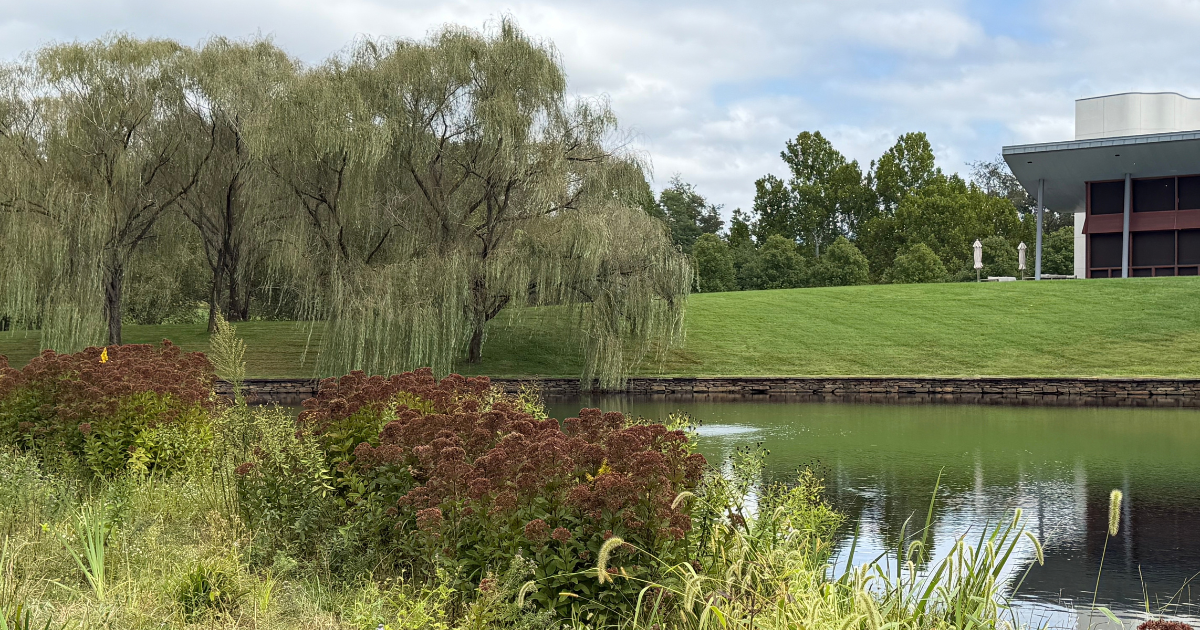
Glenstone is a place where art, architecture, and landscape come together. Its acres of cultivated and natural landscapes hold buildings with art installations as well as art integrated right into the land. It is also committed to native plant-forward palettes and organic management. Mary attended a training there in 2025 with meadow designer Larry Weaner, and she has wanted our partners to see it for themselves ever since.
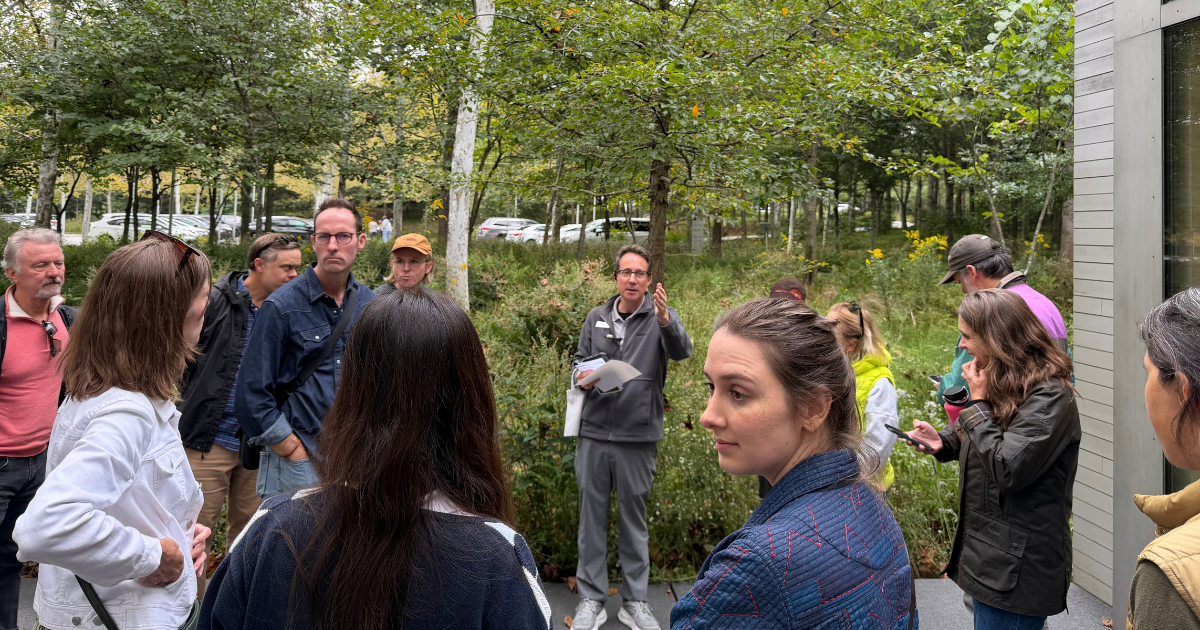
At Capital Trees, the work doesn’t end when the last plant goes in. Stewarding a greenspace over the long term is a project in itself, and it’s the mindset we bring to the design and future stewardship of any project. So we did what we do best and brought people to the table. Working with Marvel Architects, we invited the partners (Richmond Parks, Recreation, and Community Facilities; Friends of James River Park) shaping one of the projects we are all collaborating on (Mayo’s Island). Marvel widened the circle to include colleagues across Richmond who are cultivating native plant-forward, sustainably stewarded greenspaces: the Science Museum of Virginia; the Virginia Museum of Fine Arts; and Thomas Rainer of Phyto Studio. Together, we walked the entire site and toured it with a guide, seeing firsthand what it takes to keep a publicly accessible, organically managed landscape thriving.
The Landscape
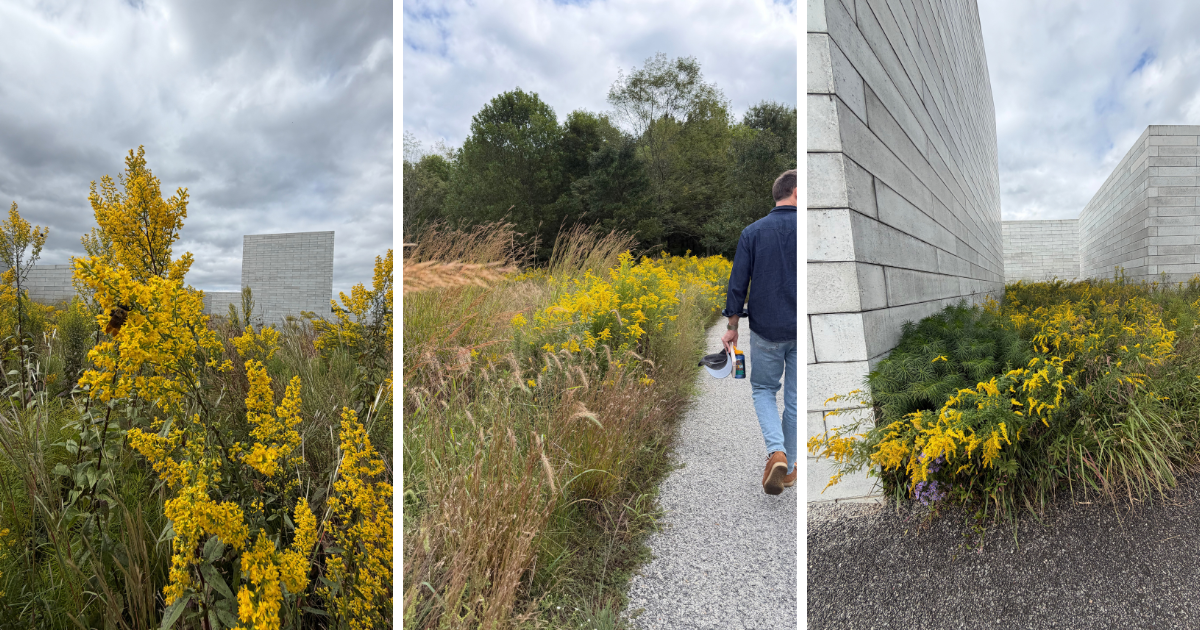
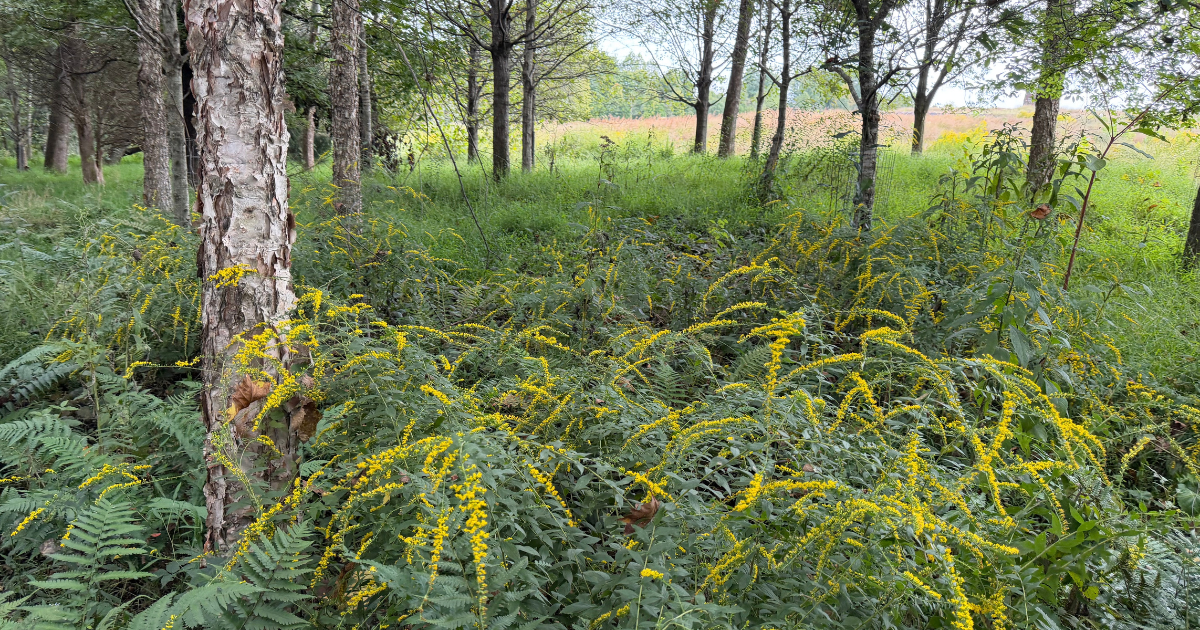
Early fall was a wonderful time to visit. The grasses were the stars, with their changing colors, varied shapes, and seed pods swaying in the breeze. Bluestem and purple top stood out, and golden hues of goldenrod played off their tones.
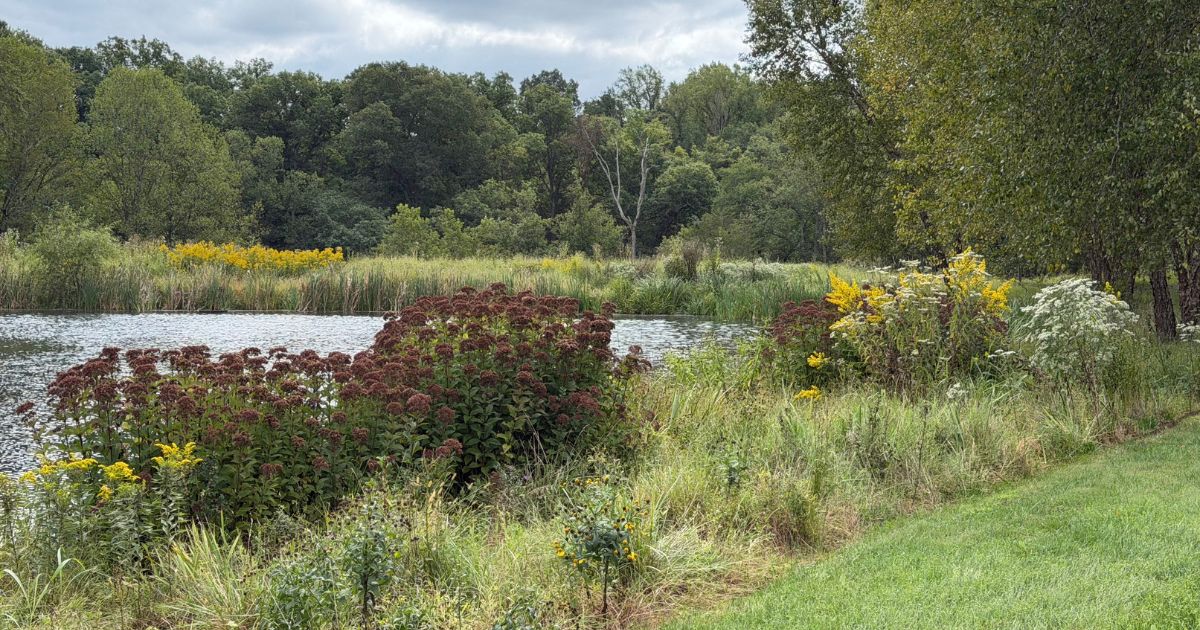
What made the plantings work was massing. Delicate stalks and muted colors that are easy to miss as single plants. Sweeping swaths of color show up in the landscape when grouped together. The land itself was shaped with contours that created both vistas and valleys, and winding paths led to small vignettes, each with a different ecosystem or a piece of art.
The level of care also varied. Near structures, the landscape is more ordered, but never so tidy that it feels separate from the rest. Farther out it’s left wilder, while paths and parking areas are kept nearly pristine. There’s very little signage, so visitors are invited to immerse themselves in the landscape and talk to staff if they have questions.
What we learned about management
- Invasives are a constant fight. Glenstone isn’t immune. Stiltgrass is a persistent challenge, and staff are always working to remove or limit unwanted plants.
- Thatch is a hidden problem. Over time it builds up, blocks desirable seeds from germinating, and gives stiltgrass a place to take hold. Glenstone burns a different portion of its meadows each year to keep it in check.
- Patience is part of the plan. A new meadow takes five to seven years to fully mature, and the first year involves multiple mowings.
- Sometimes poor soil is the point. For their newest meadow, staff cleared all plant material, scraped the ground, and rolled the soil in two directions to thoroughly compact before seeding. They’re testing whether native seed mixes germinate best in poor, compacted soil.
 What’s Next
Glenstone reminded us that caring for the world begins with nurturing the earth beneath our feet, and that the most beautiful places are the ones tended with patience. The lessons we saw there are the ones behind our own approach to sustainable management: improving soil quality, managing pests and invasives responsibly, increasing biodiversity, and supporting the wildlife that depends on these spaces. It’s why we choose sustainable methods wherever we can, like using solarization to control weeds at the Hotchkiss Green.
We’ll bring what we learned back to the greenspaces we care for every day. None of it happens alone. It takes partners at the table and neighbors with their hands in the dirt, learning skills they can take home to their own yards. Our weekly volunteer workdays are open to everyone, and no experience is needed.
Come step off the pavement and onto the grass to see this stewardship in action.
Join us for a tour. Contact info@capitaltrees.org to schedule a walk and talk.
Join us for a volunteer workday. No experience is needed. Find our upcoming volunteer opportunities here.
Together, let’s plant the future the next generation deserves.