Written by: Mary Petres, Capital Trees Horticulture Manager
Capital Trees is known for our transformative greenspace projects, but a critical part of our work is also maintaining those spaces after they’re created. Our maintenance approach prioritizes sustainable and ecologically responsible stewardship in order to ensure that our public greenspaces remain beautiful for visitors and teeming with biodiversity.
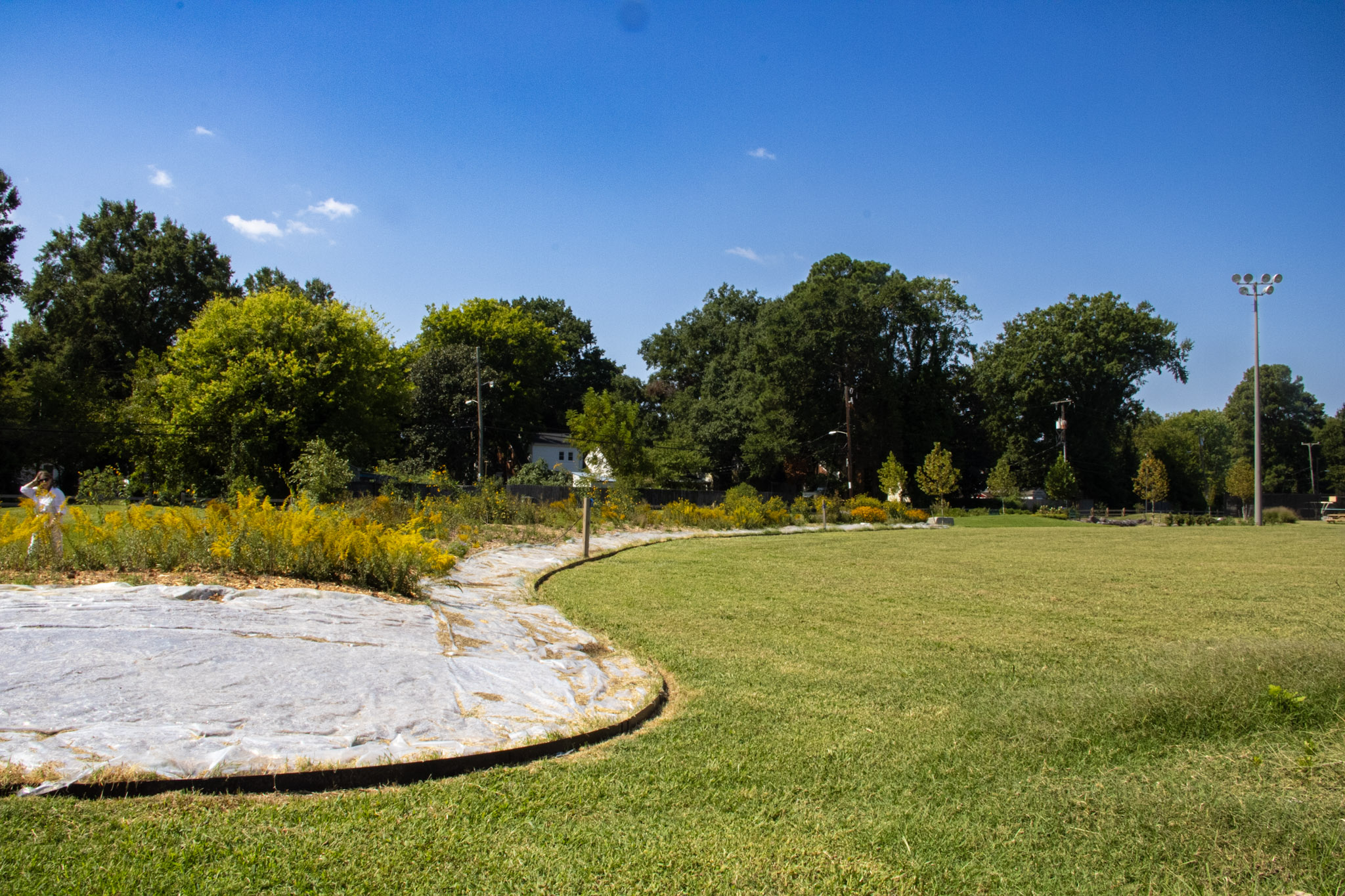
Our most recent project, the Hotchkiss Green, is located behind the Hotchkiss Field Community Center at 701 E. Brookland Parkway Richmond, VA.
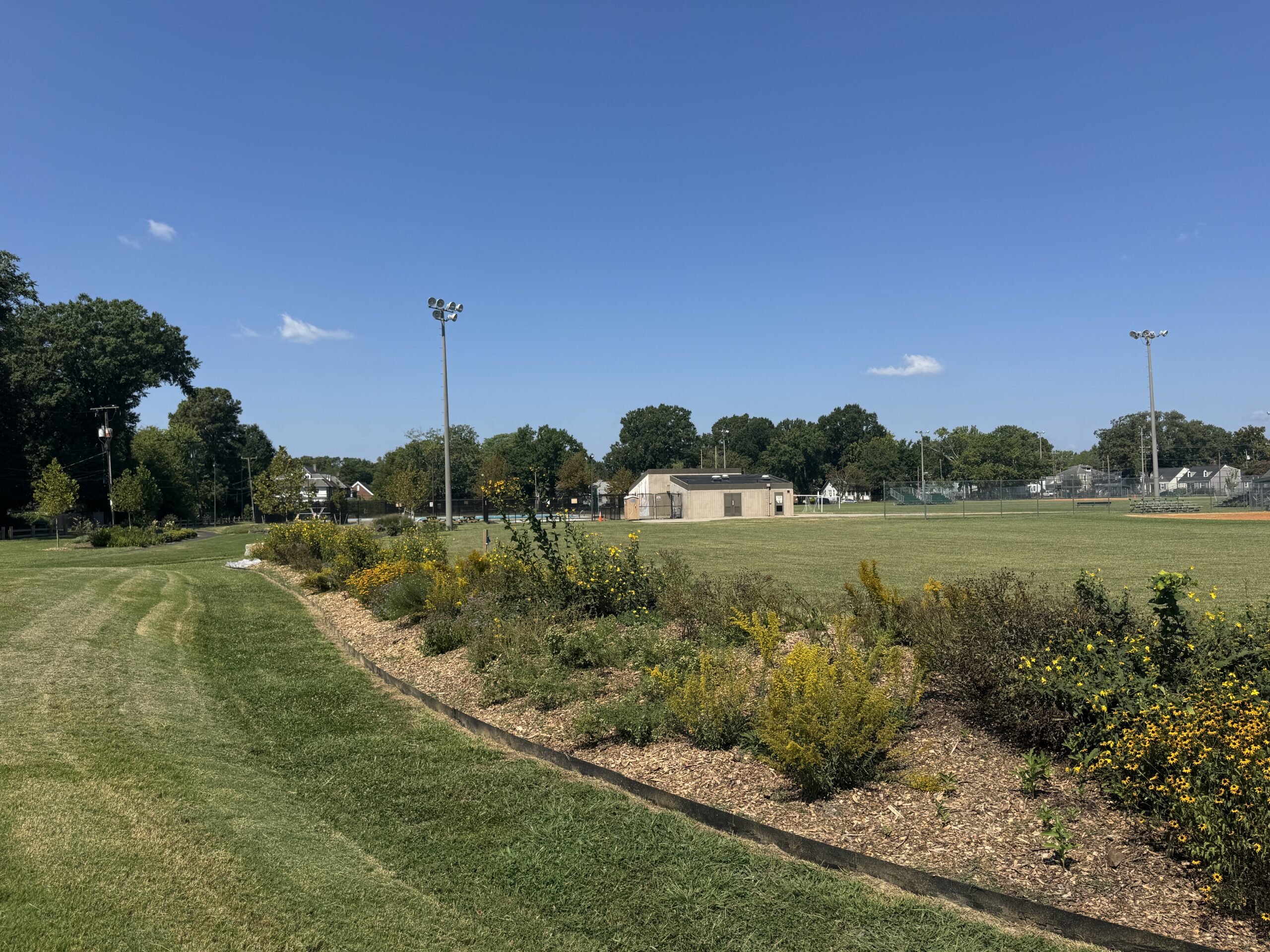
We created a pollinator berm in winter of 2024, initially covering it with 6” of mulch to improve the soil and suppress weeds. When you disturb soil, weed seeds can come to the surface and sprout, so we left the berm unplanted for several months to allow any weeds to sprout and subsequently be removed. In September 2025, we planted 1,300 pollinator friendly plugs into the pollinator berm. Landscape plugs (shown below) are specially grown seedlings that develop quickly and establish hardy root systems. 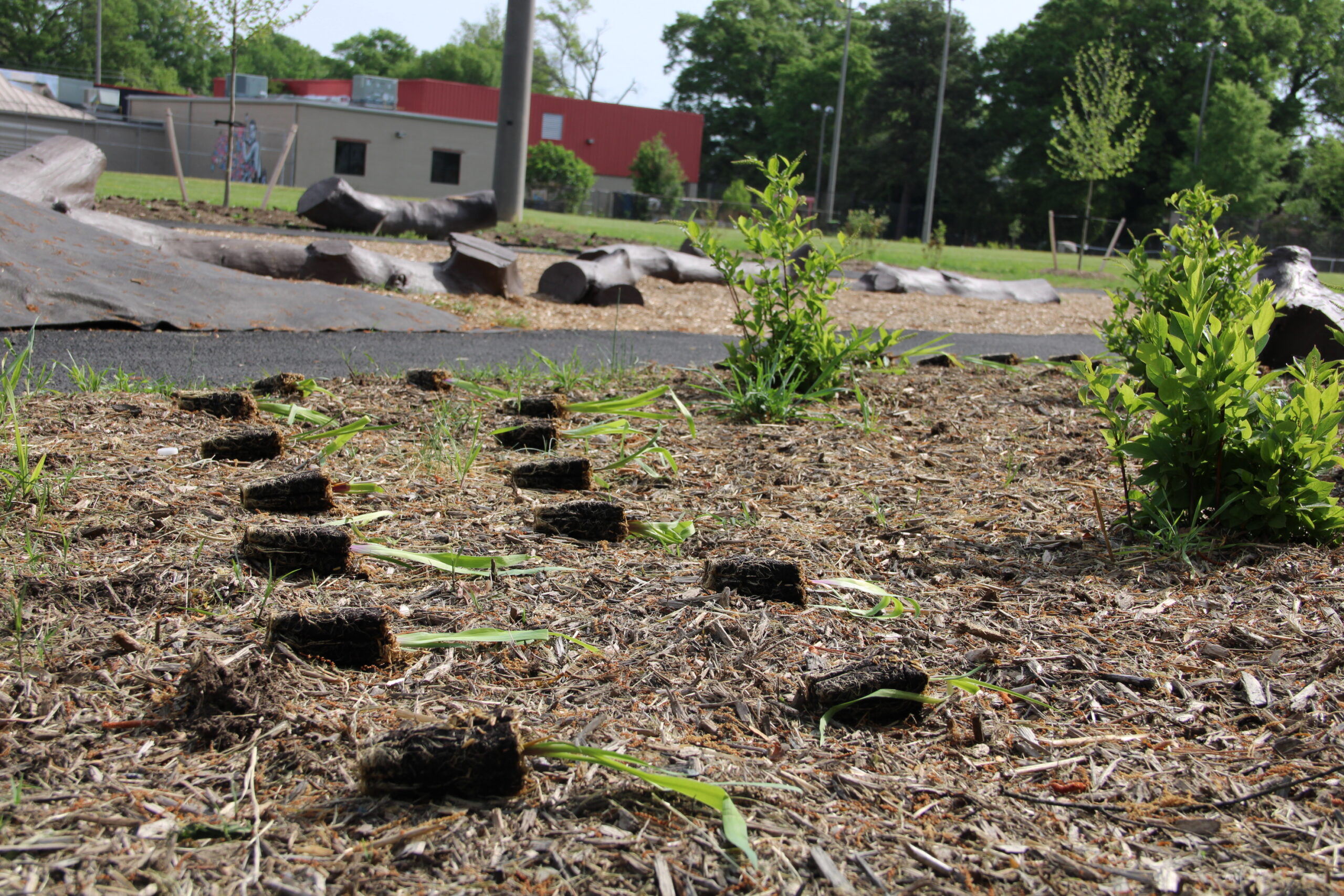 The picture below shows just one season of growth after planting! It is hard to fathom how such a tiny plant can develop so quickly, and it’s always incredible to witness. The goal was to plant the plugs densely to shade out any competing weeds that might want to move into the garden. That technique has proven highly successful where the plants are densely planted. Using plugs is also a cost effective way to plant a large number of plants for bigger scale projects like this.
Unfortunately, not everything went off without a hitch. During the year that the berm was unplanted, wire grass and crab grass from the surrounding turf crept into the edge of the bed on the north side. As a small nonprofit, we did not have the resources to remove the encroachment prior to planting the plugs so we left it alone. We also left this area unplanted.
Since then, these weeds have been difficult to manage through hand pulling, and since we avoid using harsh herbicides, we needed to explore a more sustainable solution. We’ve opted for a non-chemical technique to address the encroachment, known as solarization. The process involves covering an area of vegetation with a thick (4 to 6 millimeter) UV-stabilized greenhouse or agricultural grade clear plastic. As the sun beats down on the plastic, it traps heat and moisture which initially encourages seeds to germinate and vegetation to grow. Over time, the temperatures under the plastic rise enough to kill the vegetation top growth and roots as well as some of the seed bank. The degree of kill depends on the amount of heat build up and the length of time the heat is maintained. In Richmond, the best time to employ this method is June through September. In the height of summer, solarization can heat the ground to a depth of 2-6”. This will likely not result in a complete kill on deeply rooted weeds like wire grass, but can help reduce some of the vigor of the plant.
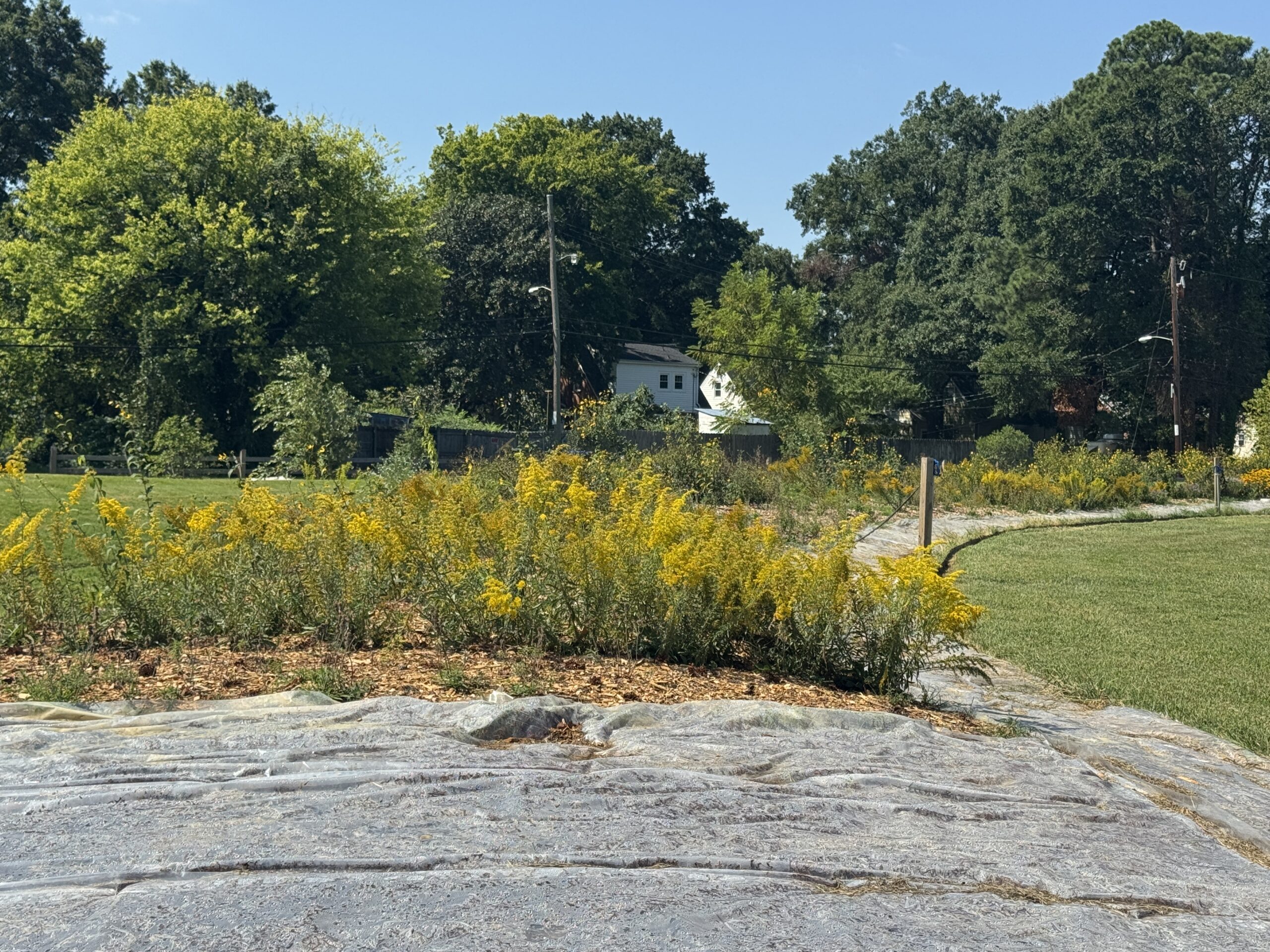
If you’re interested in using this method yourself, it’s important to securely anchor the edges of the plastic to help trap heat. You can:
- Dig a border trench, lay the edges of plastic in the trench, and cover them with soil and mulch.
- Anchor the edges with landscape pins or staples and cover the edges with dirt or mulch.
From our experience, landscape pins alone are not sufficient. Wind gets under the edges of the plastic and rips it up, and unsealed edges allow heat to escape, reducing the effectiveness of the process.
Another word of caution is to monitor the stability of the plastic. Over time the UV exposure causes the plastic to become brittle and break into many small pieces. The goal is to remove the plastic before it reaches this state. Unfortunately we learned this lesson the hard way.
A fair concern is what happens to the soil microbiome in the solarized area. The answer is that there is likely to be a short term hit due to the soil being heated to high temperatures. However, after we plant landscape plugs, the area will be mulched with arborist wood chips which will break down quickly to help reestablish the soil to a healthy state.
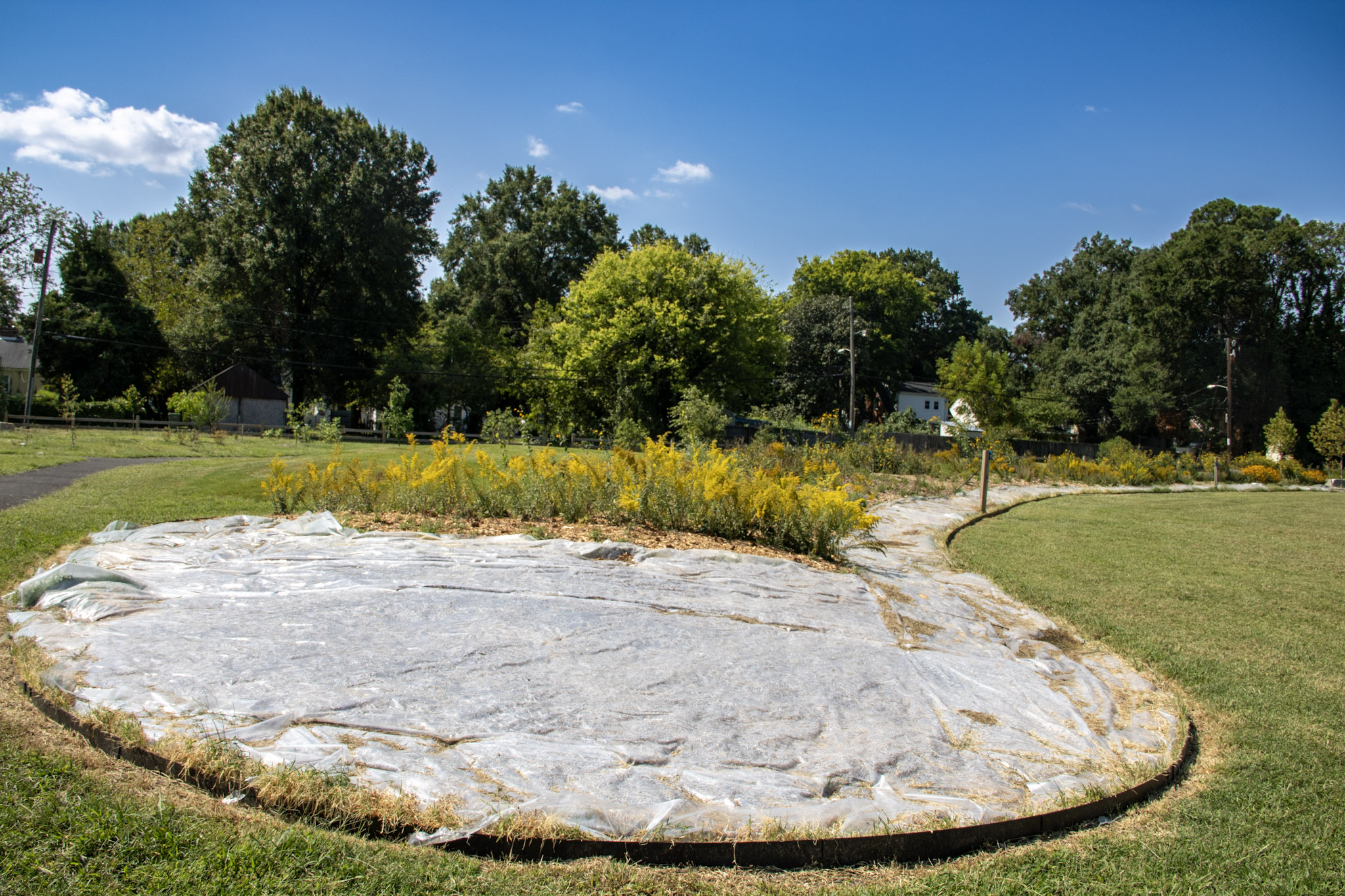
This is a work in progress at the Hotchkiss Green. We will be removing the plastic after several more weeks to see the progress we’ve made on controlling the weeds. We’ll write a follow up blog post to show the results of the solarization and the installation of plugs in the solarized area.
Happy fall!